The robotic buoy Revolutionising racecourse management: Valentina Venturi’s innovation with Effetto Venturi

Vuoi salvare articoli per un rapido accesso?
Sali a bordo della community DN Plus.
Per te, un'area riservata con: approfondimenti esclusivi, i tuoi articoli preferiti, contenuti personalizzati e altri vantaggi speciali
Accedi RegistratiCombining advanced engineering and sailing expertise, Effetto Venturi introduces GiPSy Buoy, a remote-controlled autonomous mark that speeds up race management, reduces environmental impact and is gaining global adoption—from local clubs to the Paris 2024 Olympic Games
Combining advanced engineering and sailing expertise, Effetto Venturi introduces GiPSy Buoy, a remote-controlled autonomous mark that speeds up race management, reduces environmental impact and is gaining global adoption—from local clubs to the Paris 2024 Olympic Games
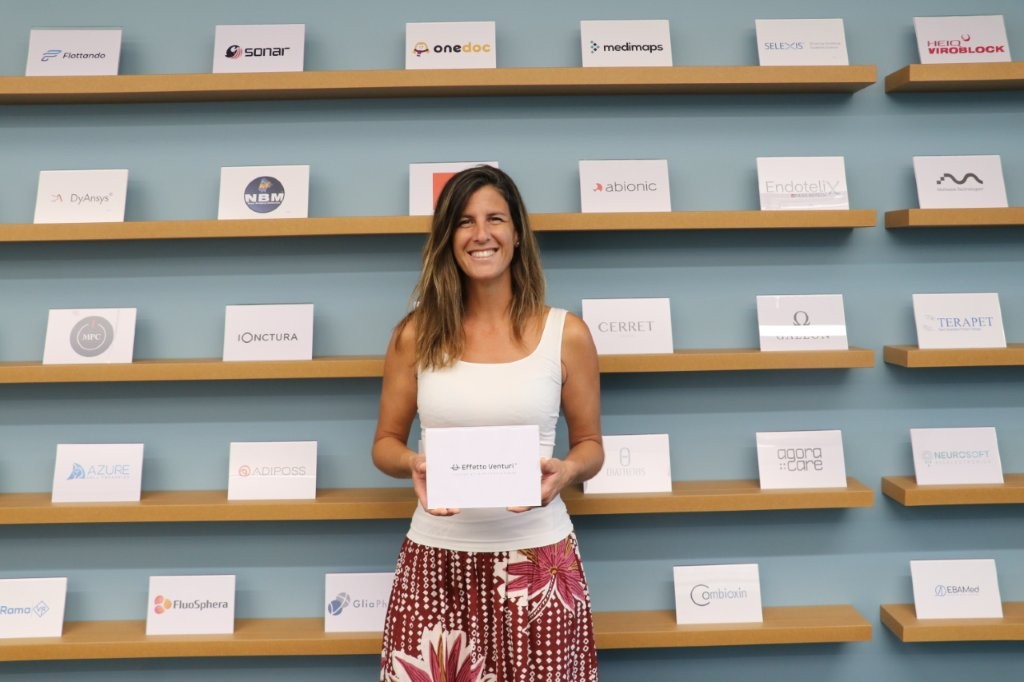
Valentina Venturi is an Italian engineer whose background spans aerospace, chemical and mechanical engineering. She holds a degree in Aerospace Engineering, a specialisation in Chemical Engineering and a PhD in Mechanical and Power Engineering completed at CERN, where she worked as an engineer for several years. Alongside her scientific career, she is an experienced sailor, active in double-handed dinghies and occasionally in J/70 events. Effetto Venturi, the Italo-Swiss start-up she founded in Geneva—where both production and headquarters are based—emerged from the meeting point between her technical skills and her practical experience on the water. The company develops lightweight, safe robotic buoys that can be fully operated remotely.
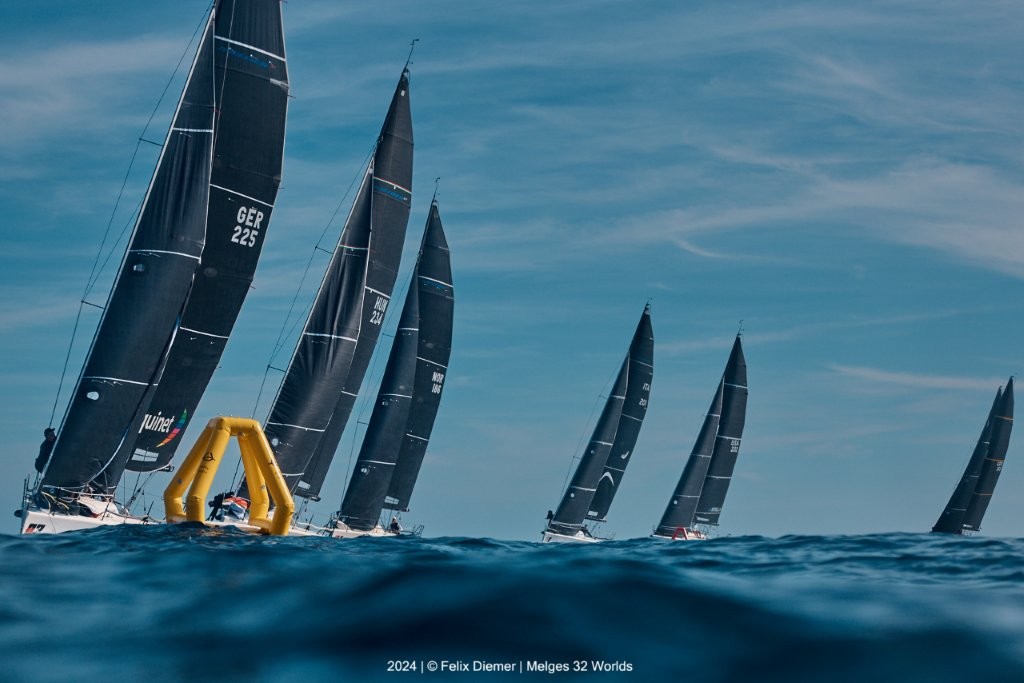
The idea came during training sessions and races. “During regattas I often spent more time waiting than actually racing. Wind windows were short, and we often failed to take advantage of them because laying traditional marks took longer than the wind itself,” Venturi explains. The sight of a drone hovering over the fleet prompted her to imagine an equivalent solution in the water—one capable of holding position without an anchor.
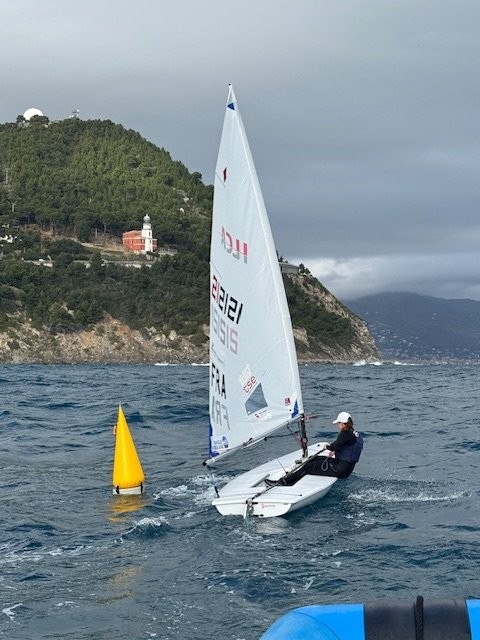
The result is the GiPSy Buoy, an autonomous buoy equipped with four electric thrusters and a proprietary control board integrating accelerometers, gyroscopes and GPS. The autopilot processes sensor data and stabilises the buoy in its assigned location, while a web-based interface allows race officers to manage the entire system. “The mastery to work remotely completely changes race management: you can react to the wind in real time without physically moving each buoy,” says Venturi.
Alongside its main line of buoys, Effetto Venturi has also developed GiPSy-Mini, a compact solution designed for sporting applications and operational use in more confined spaces. During the latest METS (Marine Equipment Trade Show) 2025 in Amsterdam—the world’s largest B2B exhibition for boating accessories, equipment, materials, systems, and services—the model received significant international recognition: a nomination and special mention for the 2025 DAME Design Awards in the Manufacturing, Support Products & Materials category. A clear sign of the growing interest in autonomous technologies within the marine industry.
Also at METS 2025, Effetto Venturi won the Metstrade Start-up Pitch Competition, organised by Yachting Ventures and designed to showcase innovative ideas while fostering connections between promising startups, industry experts, investors and potential partners. This year’s edition saw particularly strong participation, with companies such as Roxen Innovations, Boatscribe, Hefring Marine, Smart Drinx and Titanium Technology among those selected to present their projects.
Environmental impact has been a central consideration for the company. “Anchoring is the most damaging aspect of traditional buoys: it impacts the seabed and can harm sensitive habitats such as Posidonia oceanica. A robotic buoy eliminates this issue,” Venturi notes. To reduce end-of-life waste, the company has chosen materials that are easier to recycle, such as rotomoulded polyethylene. While manufacturing and charging batteries require energy, the reduced need for support vessels—and the accompanying emissions—creates a more sustainable overall balance.
Operational conditions still present challenges. “Below 5°C, batteries perform less efficiently, so higher-capacity packs may be necessary. Above 15°C the system reaches its optimal performance,” she explains. Waves and strong winds influence the time required for repositioning, but the four-thruster configuration keeps the buoy steady even in gusts of up to 35 knots.
Effetto Venturi is now fully in its commercial phase. “Orders arrived even before the product was ready,” Venturi recalls. The buoys have been adopted by clubs in Italy, Switzerland, Denmark, Croatia, Japan, Chile, Canada, Scotland, Ireland, Hong Kong and several other countries, and were also used by the French Sailing Federation during the Paris 2024 Olympic Games. “Once a club tests the system, it rarely goes back to anchored buoys, except for cost-related or organisational reasons.”
There have been obstacles along the way. The global component shortage in 2022 forced the startup to design its own control board. “It was a challenge, but also an opportunity: that technology is now attracting interest beyond the boating world,” Venturi says. At the same time, new restrictions on anchored buoys for environmental reasons have created favourable conditions for alternative solutions.
The company’s growth is supported by the City of Geneva’s incubator. “The legal, administrative and financial support has been essential. For a young company, having access to that expertise truly makes a difference,” Venturi states.
Looking ahead, the founder foresees an expansion beyond racing. “I believe we’ll see increasingly broad applications: environmental monitoring, port operations, inland waters. The aim is to make the buoys ever more efficient, sustainable and versatile.”